

.png)

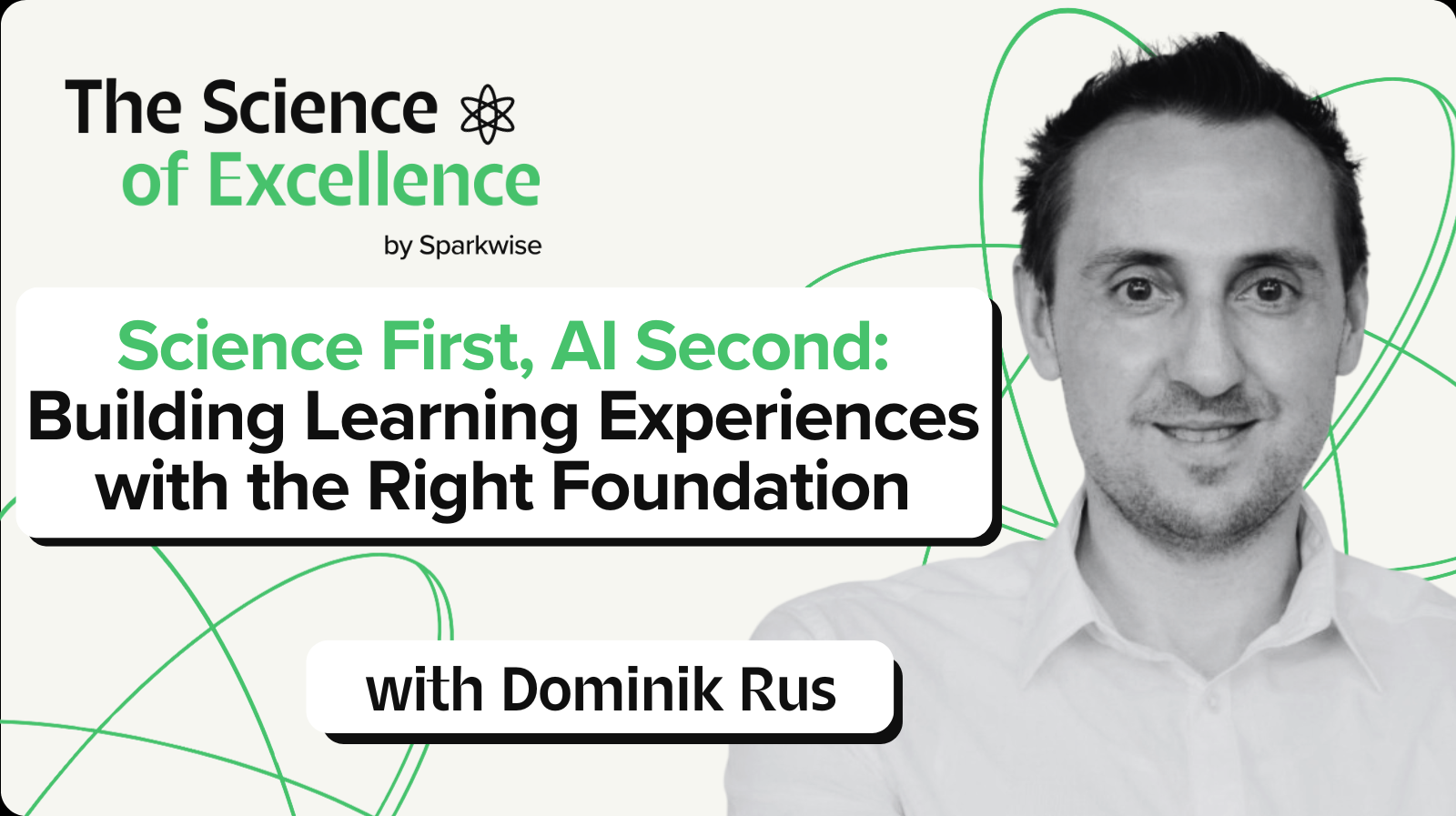
In this episode of The Science of Excellence, I sat down with Florence Evina-Ze Baez, EVP at Bain Capital, where she partners with portfolio company executives to drive strategy and performance. Florence brings experience from leading distributed teams at Ipsy and consulting at McKinsey.
We talked about what unlocks human potential, how simple goals create alignment at scale, why getting people into the right roles matters more than vertical talent assessments, and the mechanisms that make middle managers effective. Florence shared insights on building culture across distributed teams and why listening to your frontline through formal surveys drives real change.
These 4 insights stood out from our conversation:
- Rally Everyone Around One Simple Goal
- Build Culture Through Shared Rituals
- Invest in Middle Managers as Your Lynchpin Layer
- Find the Role That Turns Work Into a Calling
1. Rally Everyone Around One Simple Goal
In Florence's Words: "I think about my time at Ipsy where I was leading a customer care team, and our goal was to create the best possible experience for our Ipsters, which is what we called our customers. When you always just have that mindset of like, am I making this better for my Ipster? It just makes your decision making so much easier, whether you're an hourly employee answering an email from a customer or a senior executive thinking through the strategy. Having that one goal that everyone can rally around is super important."
Complex scorecards don't work. When you have 20 metrics across five categories, no one operates effectively. Simple goals do.
At Ipsy, the goal was to create the best possible experience for customers. Clarity made decision-making straightforward at every level. An hourly agent answering emails and a senior executive setting strategy could both ask the same question: does this make it better for our customer? One goal, repeated consistently, creates alignment at scale. Without it, you get fragmentation and confusion.
2. Build Culture Through Shared Rituals
In Florence's Words: "I was leading a team that at its peak was probably 500 people in the Philippines, in Argentina, and in four different states in the United States. Working at all levels from directors down to frontline agents. The biggest thing that worked was really having culture, or common rituals that we could all get excited about. We used to have a standup call every Thursday and we would have different traditions. In July we had Harry Potter month because that's when his birthday is. Every Thursday we would have some activity related to Harry Potter and we'd have our own house cup. Those things got every single person to rally around."
Distributed teams need more than video calls. They need shared experiences that create identity. At Ipsy, Florence's 500-person team spanned multiple countries and time zones. She only saw some team members once a year.
What held them together were rituals everyone participated in—weekly standup calls with themed activities, contests, shared traditions. Instead of forced team-building exercises, they chose to focus on quirky things the team created together that made work more fun and helped people be themselves.
Combined with the clear goal of serving customers, these rituals built a strong culture across geography. The specific rituals matter less than having something unique that makes people feel part of something bigger.
3. Invest in Middle Managers as Your Lynchpin Layer
In Florence's Words: "The top leaders have to have that aligned vision, that agenda they can set, but the real work is at the middle manager layer. Are they getting the messages from the top that matter? Are they focused on the things that ladder up to the most important things for the business? How are they communicating that to their teams? Their teams are the ones taking the orders, out with the customers, dealing with the firefighting every day. That's the most crucial layer. When it's not going well at that layer, you really see it. Their ability to deliver the messages but then also coach and develop their teams is really one of the secrets to success."
Middle managers are the lynchpin. Senior leaders set direction, frontline employees execute, but middle managers translate strategy into action. When this layer fails, everything falls apart. When it succeeds, the organization performs.
Most organizations underinvest here. They provide intensive coaching to senior executives but leave middle managers to figure it out. Florence combines backbone processes for common needs with targeted one-on-one coaching. Weekly team meetings teach skills like reading a pipeline. Individual sessions address specific development gaps. This combination scales effectively because it treats middle managers as the lynchpin they are.
4. Find the Role That Turns Work Into a Calling
In Florence's Words: "I had a direct report at Ipsy who was leading our analytics for customer care. She did a good job. But then she reached out and said, 'Hey, I'd love to do this training. Can I do that?' We opened up a role solely dedicated to learning and development. She took on that role and it was amazing to see how she blossomed. She was coming up with ideas, thinking 10 steps ahead, thinking about how this person learns versus that. When she was in her analytics role, it was just a job versus a calling. She found the thing that she loved to do and I could just see so much more of her potential."
When it comes to talent, the horizontal dimension matters most. Where should you fit? What are you passionate about? Someone who thrives in one environment can struggle in another. Someone competent in analytics can become exceptional in learning and development.
When work aligns with what someone loves doing, you see their potential unlock in ways that weren't visible before. The job becomes a calling instead of just work. This is especially important in PE portfolio companies where you're asking people to do harder things faster than before.
Until next time,
Vince

.png)
.png)
.png)

.png)
.png)

.png)
.png)
.png)


.png)


.png)