

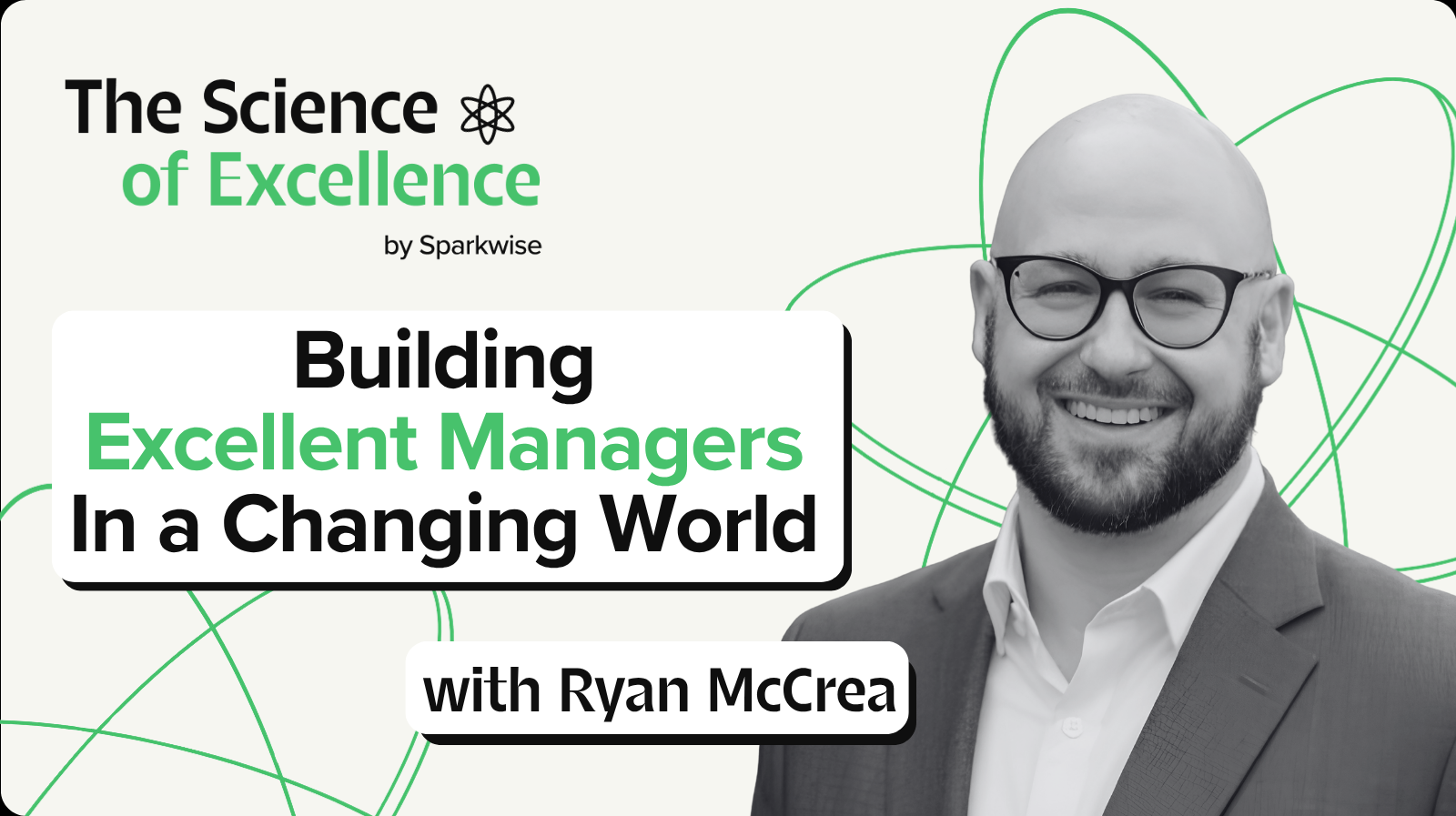

In this episode of The Science of Excellence, I sat down with Ryan McCrea, President of the St. Louis Organization Development Network and author of Quick Bites of Insight. Ryan has spent 22 years in HR with the last 15 focused on leadership development.
Managers are massively undervalued. The Workforce Institute found that leaders impact employees' mental health nearly as much as their spouse, more than doctors, therapists, or family members. Yet organizations focus energy on the C-Suite while underinvesting in the people who actually shape daily employee experience. We talked about what separates great managers from good ones and how to develop them effectively.
These 4 insights stood out:
- Great Managers Don't Solve Everything
- Nice Doesn’t Mean Effective
- Stop Treating One-on-Ones Like Standups
- Develop New Managers from Day One
1. Great Managers Don’t Solve Everything
In Ryan's Words: "We have this expectation that a great manager solves everything. They're the hero that can jump in and save the day. A good manager says, here's how I do it, here's the way you should do this. But a great manager says, let me remove the friction, but really help you think better. Let me elevate your thinking. Give them flexibility to do that on their own."
Telling people how to do everything all the time isn't good leadership and prevents growth.
Great managers give people space to make mistakes and learn their own way. If you solve everything, they're not growing and you're not preparing your replacement. A great manager removes friction, elevates thinking, and gives flexibility to figure things out. You've done your job well when you can walk away for three weeks and your team will be fine.
2. Nice Doesn’t Mean Effective
In Ryan's Words: "We have this expectation that a great manager solves everything. They know every little thing, they're the hero that can jump in and save the day. A good manager will say, here's how I do it, here's the way you should do this. But a great manager says, let me remove the friction here, but really help you guys think better. Let me elevate your thinking. Let me show you how to think strategically. Give them flexibility and openness to do that on their own."
Managers confuse being supportive with avoiding discomfort. Dodging hard conversations isn't kindness.
Human-centric leadership doesn't mean avoiding accountability. You can't just hold people to standards without caring about their feelings. You also can't just be empathetic without expecting results. The best managers do both. Most people naturally lean toward one side, so the work is figuring out where you fall and building the muscle for the other side.
3. Stop Treating One-on-Ones Like Standups
In Ryan's Words: "Most managers don't know how to have a good one-on-one because no one taught them. Right now it's so tactical. A checklist: how's this project, how's that project. They treat it like a daily standup. I use the thirds method. First third: what does that person need. Second third: what do I need from them. Third piece: development conversations, feedback to them, feedback from them to me."
One-on-ones have a tendency to become status updates instead of trust-building conversations. Ryan’s third method aims to solve that.
The first third addresses what the person needs from you so they can move forward. The second third covers what you need from them or information they need to do their job. The third is for development feedback both ways and understanding how you can show up better. You won't always get to that third piece, but it builds trust. Sometimes you won't talk about work at all because they're struggling and need guidance.
4. Develop New Managers from Day One
In Ryan's Words: "At CLO Exchange I constantly hear, we need to get back to basics with managers. What that tells me is, what did we not do in the beginning to help grow and develop them? When you're a great salesperson or engineer, that does not mean you have the skillset to be a great manager. You are learning a brand new job. If we're not developing those people right off the bat, you're gonna wonder why three or four years in you've got managers that aren't having conversations and teams aren't performing."
Organizations wait years to teach basics, then wonder why managers are struggling. Being promoted doesn't automatically transfer skills.
Becoming a manager is learning a brand new job and being a great individual contributor doesn't make you a great manager. You can't teach everything in the first year, but give them the basics. Help them understand feedback, coaching, and hard conversations. If you don't, three or four years later you'll have managers who aren't meeting expectations and you never told them how to be a leader.
The transition from individual contributor to manager is like becoming a parent. It's not all about you anymore, and you can cause real damage if you're not equipped.
Until next time,
Vince

.png)
.png)
.png)

.png)
.png)
.png)

.png)
.png)
.png)


.png)


.png)