

.png)

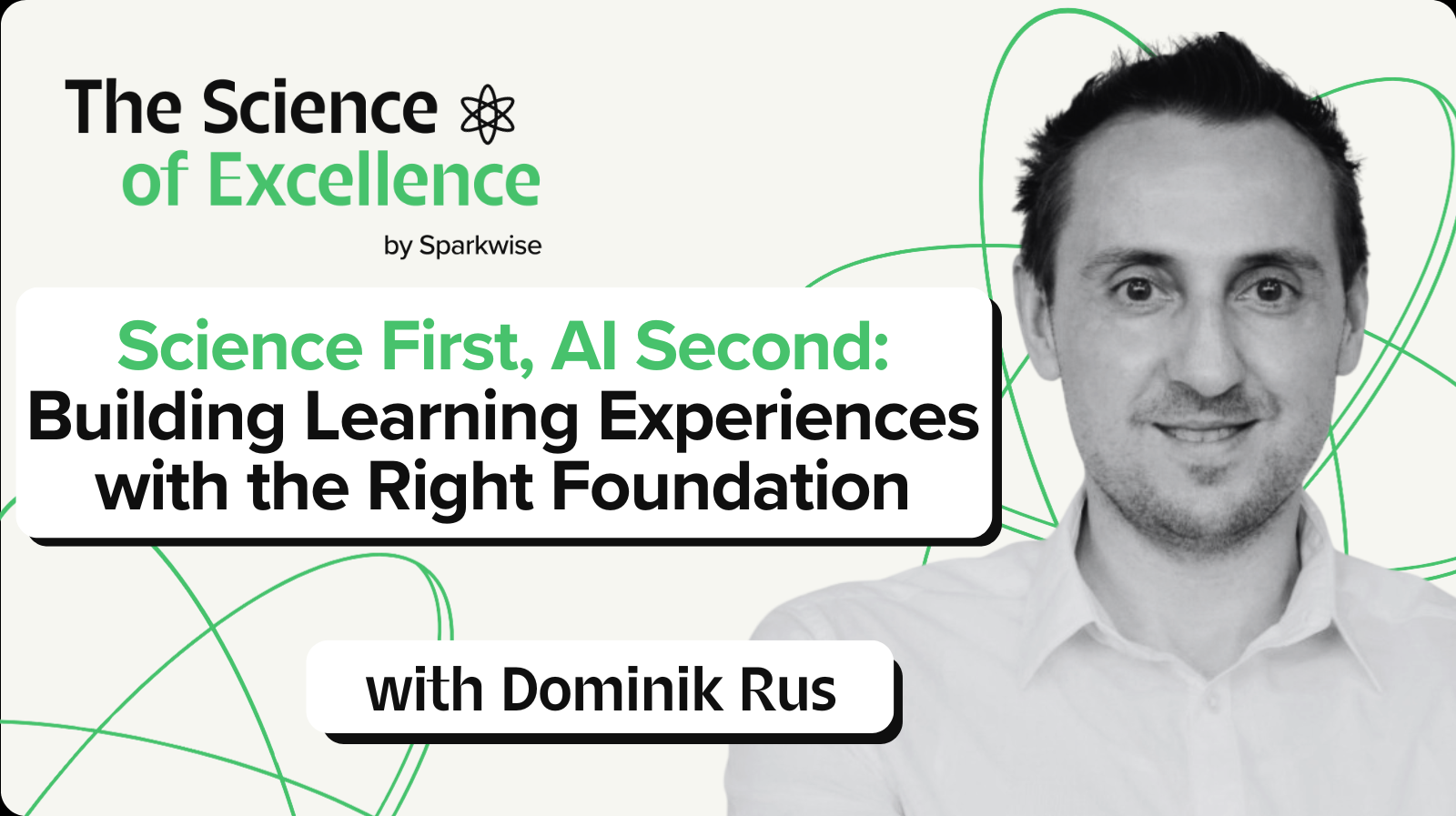
In this episode of The Science of Excellence, I sat down with Neil Hunter, Chief Learning Officer at Deloitte Canada. Neil has spent his career building talent in professional services and is now leading the change on how organizations develop people in the age of AI.
We talked about why AI is hollowing out junior expertise, how to scale apprenticeship, and why the highest form of learning is actually unlearning.
These 5 insights stood out:
- Protect the Struggle
- Remember What It Felt Like Not to Know
- Balance Speed with Development
- Build the Environment, Not the Program
- The Highest Form of Learning Is Unlearning
1. Protect the Struggle
In Neil's Words: "AI is hollowing out the expertise of our junior practitioners. They have the easy button answer, but there's no depth to it. When you double-click, it's like, you're as informed as I am, as opposed to we've actually done this 24 times in 15 different industries. There is no easy button for rewiring this. Friction and struggle is a gift. That is where the rewiring happens."
AI's instant answers are often flat and generic. Worse, having the answer immediately removes the need to ever ask why.
Neil's personal AI agent is built so it won't give him the answer, working through the struggle with him instead. He's even considered withholding AI access from junior staff in their first couple of years, the way you'd make someone do long division before handing them a calculator. Once you know the why, you catch it when the calculator gives you an odd answer. That depth is what clients actually pay for.
2. Remember What It Felt Like Not to Know
In Neil's Words: "The best way to get a guitar teacher to go back to a beginner's mindset is have them play left-handed instead of right-handed. You forget how the strings just don't make a sound if you can't press proper. The learner doesn't have the same calluses on their fingers as you. When you flip the guitar, you remember what they're struggling with. We are trying to find guides who understand what the beginner is experiencing. They may not be the most experienced, but they know how to teach the skill best."
The most experienced person in the room is often the worst teacher because expertise creates blind spots about what it was like to not know.
At Deloitte University, retired partners come in to tell stories. The feedback they get is that the stories are powerful but no longer relevant to how work actually gets done today. With AI and new ways of working, junior staff often know things seniors don't which allows for apprenticeship to run both ways. Recognizing that is part of the humility shift happening across the profession right now.
3. Balance Speed with Development
In Neil's Words: "The reason junior staff don't do the extra double-click is because it's not built into how we do projects anymore. We used to build projects with apprentices in the model. They were allowed to take longer. They were figuring it out. That's been squeezed out for cheaper and faster. Our juniors want the time to apprentice and learn the why, but are being driven by demands for faster to get the answer quickly instead of understanding why they got that answer."
After COVID, Neil expected juniors to be perfectly happy working from home. In reality seniors were comfortable at home while juniors were pushing to come back.
The desire to apprentice is there, but what’s killing it is the business obsession with short term efficiency. Entire systems and processes reward speed and there's no time built in for the extra question or the deeper conversation. Neil's view is that leadership needs to design work differently, pace projects intentionally, and have honest conversations with clients about whether they want a quick answer or something with real depth.
4. Build the Environment, Not the Program
In Neil's Words: "The more I spend in my role as CLO, the more I understand my job is not about creating or delivering content. It's about curating an environment where great learning takes place. If you're at a stage in your career and you know this skill, you're looking for others to teach it to. If you don't have the skill, you're looking for those that have it. If both parties are doing that, you scale without programmatizing it."
Neil calls it the Tinder of business: match people who have a skill with people who want it, then get out of the way.
To make that work, Deloitte invests in guide training, teaching the curse of expertise, how people learn, and how to break things into bite-sized pieces. The incentives matter too. The best guides are driven by pay-it-forward. If someone asks Neil whether there's a bonus for guiding well, that's a red flag. Underneath it all is teaching the why, so people anchor decisions in understanding rather than "because I said so."
5. The Highest Form of Learning Is Unlearning
In Neil's Words: "The highest form of learning is actually unlearning. Some of the most insightful moments in my career have been when I've taken something away that served me in the past but was getting in the way. Unlearning is the process of atrophying pathways that have built over time. Recognizing when those are stale and based on assumptions that no longer exist is the beginning. The number one thing to unlearn? The belief that you know the answer because you've seen it 10 times before.
As time passes, the behaviors that made you successful can become the ones that hold you back.
Going on autopilot has never been more dangerous than now. With AI, if you stop questioning things because they've always worked, there’s a good chance you’ll get left behind. Staying curious just a little longer before reaching for a familiar solution is where real growth resides. Leaders also need to stop sorting people into fixed identities early and never revisiting them.
Your team is not static, so your assumptions about them shouldn’t be either.
Until next time,
Vince

.png)
.png)

.png)
.png)
.png)

.png)
.png)
.png)


.png)


.png)