

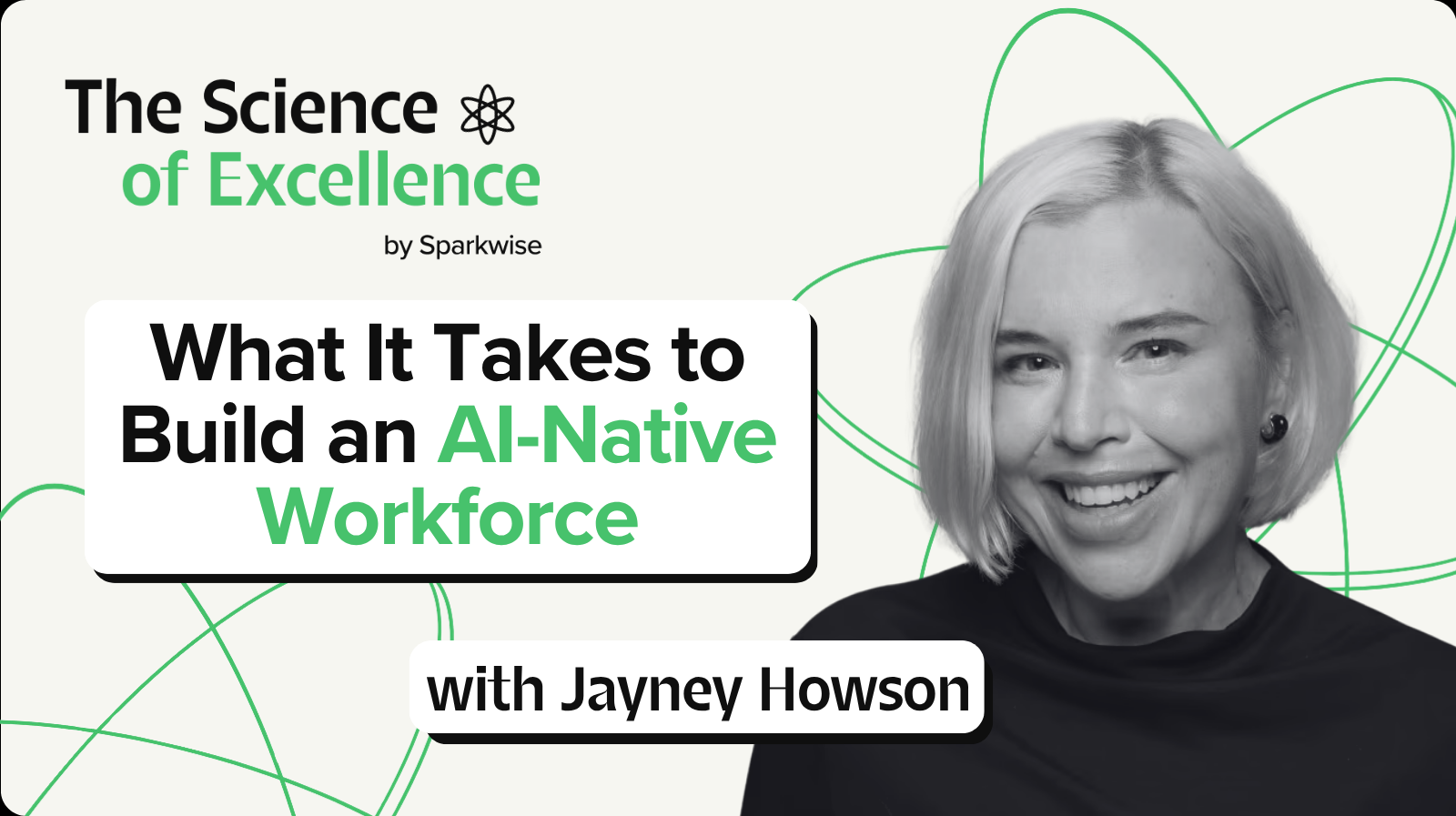

In this episode of The Science of Excellence, I sat down with Jayney Howson, Chief Learning Officer at ServiceNow, where she’s leading the company’s efforts to build an AI-native workforce.
We talked about how people need to develop as more work gets redesigned around technology. A lot of it comes down to giving them enough space to keep thinking for themselves while building new capability through the work.
These 5 insights stood out:
- Move Beyond AI Literacy
- Build Trust Before Reinvention
- Make Learning the Work
- Put Practice at the Center
- Hold Tight and Cling Light
1. Move Beyond AI Literacy
In Jayney's Words: “Getting people to use AI is not a problem. We have very high adoption rates. Getting them to use it to affect their job, to redesign it, reprioritize it, reimagine what that is, that’s the harder work. The skills move away from, ‘Do you have the skills to use this tool?’ to ‘Do you have the skills to redesign work?’”
Getting people to use AI turned out to be easier than getting them to change their work around it.
ServiceNow already has high adoption, so the harder question is what people do differently once the tools are there. Jayney talks about giving people space to rethink their jobs and building skills like systems thinking that help them see what can be redesigned. That’s also where their champions and reinvention labs come in, giving leaders and teams a place to work through those changes together.
2. Build Trust Before Reinvention
In Jayney's Words: "The number one thing is, can you ensure that you have a trusted foundation where people feel safe to do that reinvention? Because if you quickly move into training on how to redesign your job, they'll be like, 'What does this mean for me or my future?' We've doubled down on our people pact, our culture and leadership development. How do we create leaders who trust boldly, who give their teams space to do this?"
You can't ask people to redesign their job if they think the exercise might redesign them out of it.
At ServiceNow, that starts with the people pact, culture and leadership development before getting into the reinvention work. Leaders need to trust more and give teams room to experiment. That means lots of trial and error while people figure out what needs to change and what their role will become. Even a small amount of uncertainty can make people protect their current job instead of redesigning it.
3. Make Learning the Work
In Jayney's Words: "One of the things I'm getting really excited about is this concept that beyond learning in the flow of work, learning is the work and work is learning. What happens if you start to think of both of those things as the same thing and assess people versus just teach people? What we can now start to do is assess the work that's happening in the moment. Reflect back, talk about what you did and what you learnt through that."
A stretch project can often build more capability than a course and leave almost no record that the learning happened.
Jayney sees AI removing constraints that made learning and assessment separate from work. Instead of waiting for a course or exam to prove capability, people can reflect on what they did and what they learned in the moment. That gives organizations better data to serve up job opportunities and potential redeployment down the line. The work itself becomes a developmental experience.
4. Put Practice at the Center
In Jayney's Words: "We've been working on this concept of “minimum viable duration.” You want to get there as quickly as possible, but you want to make sure people genuinely have the skills. What we found was minimum viable duration is never going to be reading a course, watching a video, testing. For any type of learning, it's getting hands-on and doing as much as you can."
The fastest route to capability is getting people into the work sooner.
ServiceNow's Sim Studio puts people inside a mirror of the platform with an AI learning guide beside them. The guide changes the task based on how they perform and validates the skill in real time. Jayney says technical training that could have taken seven days can now take a couple of hours with greater confidence in what the learner can actually do. Minimum viable duration comes from stripping away time spent around the skill while protecting the practice needed to build it.
5. Hold Tight and Cling Light
In Jayney's Words: "The concept of unlearning is probably the most important thing that we need to learn. The ability to rethink and be agile in your thinking, and the courage to be able to question what you thought was always true. There's a really famous line in improv that is you have to be able to hold tight and cling light. You need to hold tight to the narrative that's going, but cling lightly to what you thought you were going to say in your mind. I think in the world of work, our ability to hold tight and cling light is the ultimate skill."
The hardest thing to let go of is often the answer that previously led you to success.
The improv rule fits well in a world where work requires constant improvisation. You have to stay engaged with what's happening without getting too attached to how you thought things would go. Jayney doesn't expect AI fluency or readiness to ever be finished, which means people need to get comfortable revisiting what they know and where they create value. Hold onto the overall direction, but stay loose about the role or expertise that gets you there.
Until next time,
Vince

.png)
.png)
.png)

.png)
.png)
.png)

.png)
.png)
.png)


.png)


.png)